Cabin crew, take your seats for take-off
March 04, 2026 · Originally published on The mobility climate
First of all, some personal news: my daily work has and is still evolving, from a focus on EIB Advisory to policy in the transport sector. This means that the topics of this humble Substack will evolve, as you will see if you reach the next paragraph, hopefully for the best.
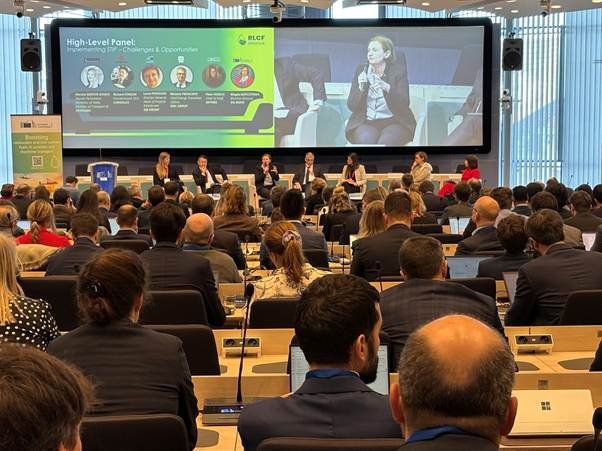
Last week took place the General Assembly of the Renewable and Low‑Carbon Fuels (RLCF) Alliance (link), with a strong EIB presence.
This is what I learnt about sustainable liquid fuels while preparing for and attending the event.
Why sustainable fuels?
Sustainable liquid fuels are expected to become the key driver of transport decarbonisation in the air and maritime sectors; however, currently it is the road sector which is its main user in the EU.
The potential of sustainable fuels extends beyond decarbonising transport, given the EU’s reliance on imports from third countries. Scaling them is directly linked to Europe’s technological resilience, strategic autonomy, and ability to retain leadership in critical industrial value chains.
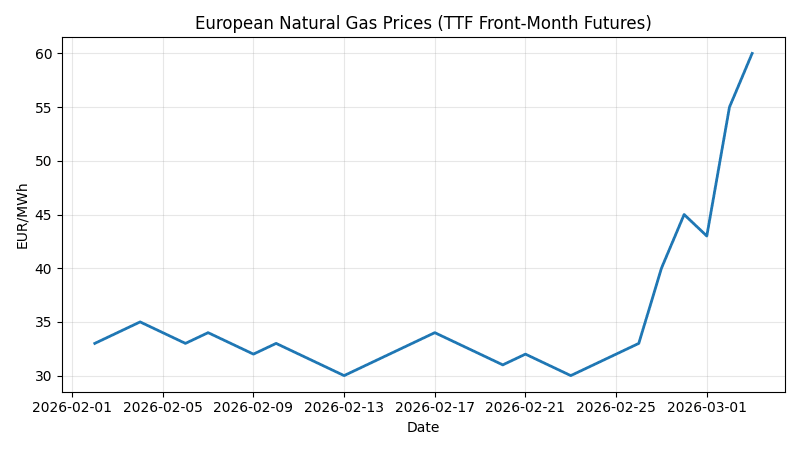
This is, unfortunately, way more clearer today than last week. Following the conflict in the Middle East, European natural gas prices, as measured by Dutch TTF front‑month futures, have spiked sharply in early March, reflecting heightened market concerns over LNG supply disruption.
Different types of Sustainable Fuels
When discussing “sustainable liquid fuels”, it’s easy to treat them as a single category. That was me a few weeks ago. In reality, the sector includes different technologies, with significant differences in terms of maturity, and, therefore, risk.
A simple distinction is helpful:
Advanced biofuels
Some pathways are already proven nearer to commercial scale, the pathways using waste oils and animal fats. But those routes face constraints as compared with expected future demand: the availability of key feedstocks (notably used cooking oil and tallow) is limited and often globally sourced. At the same time, newer advanced pathways expand the resource base, including some pathways using biomass such as straw, wood residues, and even municipal waste. These are very promising technologies, but further investment in research, development and innovation is needed.
E-fuels
E‑fuels do not rely on biomass feedstocks in the traditional sense. Their scalability hinges on inputs and enabling infrastructure: abundant and cheap renewable electricity, green hydrogen, captured CO₂ supply, and the industrial chain that converts these into fuels. They are very sensitive to changes in energy prices.
From an investment perspective, this distinction matters. Many advanced biofuel projects can be financed today under more “traditional” structures (often corporate-style lending, depending on sponsor strength). E‑fuels, by contrast, tend to face higher upfront investment costs, longer build times, and greater supply‑chain complexity, making revenue certainty and strong offtake agreements even more critical.
The EU Regulatory Background: ReFuelEU Aviation and FuelEU Maritime
The EU regulatory framework is not the gap. Quite the opposite: in aviation and maritime, and in addition to the EU Emissions Trading System (ETS), the EU has already set some of the world’s most ambitious demand‑pull mechanisms. ReFuelEU Aviation progressively increases sustainable aviation fuel (SAF) shares at EU airports, rising from 2% in 2025, to 6% in 2030, to 20% in 2035 (and 70% by 2050, with a growing eSAF sub‑quota from 2030). FuelEU Maritime sets increasingly strict greenhouse‑gas intensity targets for shipping, pushing a shift towards sustainable maritime fuels.
These regulations aim at providing predictability and stability on the future demand. However, the EU is currently at a crossroads regarding its climate ambitions[i].
The Sustainable Transport Investment Plan (STIP)
STIP, the EU Sustainable Transport Investment Plan, adds the investment dimension. It recognises that meeting mandated fuel demand will require massive new production capacity, and that regulation alone will not deliver this scale. STIP outlines several tools to improve market conditions and accelerate investment, including: revenue-stabilisation instruments (notably double-sided auctions); measures to reduce project development risks; support for supply chain components such as hydrogen, CO2 and renewable energy; and clearer long-term coordination between EU financing instruments and private capital.
STIP provides a necessary bridge between ambition and feasibility. While this framework was clearly needed, the real test will be implementation of these measures.
The key challenge: de-risking investment to scale-up
Despite the regulatory tailwinds, large‑scale investment in sustainable fuels remains difficult.
First, the price gap remains too wide. Depending on the pathway, sustainable fuels still cost significantly more than their fossil equivalents: from twice to over ten times more. Airlines and shipping operators work on thin margins, which makes committing to long‑term offtake at premium prices commercially difficult, especially without certainty on how these costs will be passed on to consumers.
Second, demand certainty is still not strong enough from a financing perspective. Regulations create mandatory demand, but they do not automatically translate into bankable off‑take contracts. Many projects struggle to secure the long‑term revenue streams that lenders require.
Third, supply chain maturity varies sharply. In e‑fuels, everything from electrolyser capacity to renewable electricity, CO₂ capture and logistics introduces additional uncertainty. Even if each component is feasible, the integrated value chain remains new, and risky.
This is why public support is essential. The STIP mechanisms, particularly double‑sided auctions, could transform the bankability of projects by stabilising revenues for producers while ensuring price visibility for buyers. Guarantees and risk‑sharing tools can further reduce perceived risks and allow private capital to step in at scale. These mechanisms require significant public budget support, and the design and funding clarity will matter enormously.
The EIB is already having a key impact
The EIB is already there, financing sustainable liquid fuels across both advanced biofuels and e‑fuels. The Bank has committed more than EUR 1bn to date, with a strong pipeline of potential financing under appraisal, spanning both e‑fuels and advanced biofuels.
Notable examples are:
MOEVE’s Biofuel Plant (Spain). A flagship example on the advanced biofuels side is the EIB’s EUR 400m corporate loan under InvestEU supporting MOEVE’s biofuel expansion project (around EUR 1bn total project size), aimed at increasing EU production capacity for advanced biofuels for road transport and SAF (link for more information).
INERATEC “ERA ONE” e‑Fuel Facility (Germany). On the e‑fuels side, the EIB has backed INERATEC’s “ERA ONE” e‑fuel facility with EUR 40m in venture debt (link for more information).
Beyond financing production plants, the EIB Group is also supporting upstream technologies and innovations needed, including Dynelectro and Metafuels.
These examples should make us cautiously optimistic. The policy commitment is there, the first investments are already materialising.
What to look out for
As I mentioned before, in my view, the key elements looking forward are:
How will the mechanisms outlined in STIP be designed and implemented
What would be the public support from the EU national budgets
And in terms of the EU, what will be the level of EU support in the next multiannual financial framework – watch out for the European Competitiveness Fund
[i] This recent piece by the FT captures the tension well: The EU’s climate retreat problem: punishing early movers - Green transition pioneers complain they are paying price for rewarding industry laggards The EU’s climate retreat problem: punishing early movers