HALF-BAKED IDEAS (I): Increasing the density of existing low-density metropolitan neighbourhoods would address both housing affordability and transport poverty
October 30, 2025 · Originally published on The mobility climate
Half-baked ideas are exactly that, ideas I’m toying with, exposed nude to foster feedback, comments, and nuance. Thinking in an EU and Spanish context.
The spark:
I was reading the monographic study on transport poverty prepared by the Spanish Ministry of Transport, when I found this graph, which made me think about the relation between housing and transport affordability.
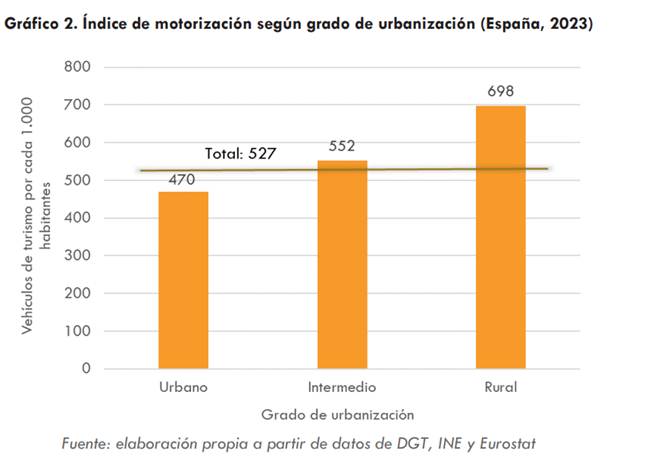
The data shows that motorization rates in Spain increase dramatically as you move from urban centres (470 vehicles per 1,000 inhabitants) to intermediate areas (552) to rural areas (698) - a clear signal that people are compensating for distance with car dependency.
The (half-baked) idea:
Thinking about metropolitan areas, so excluding the situation of rural areas.
Transport poverty and housing affordability are the two sides of the same coin. When housing is not affordable close to economic opportunities, people find cheaper options further away. Of course, this results in higher time and budget dedicated to daily mobility.
Most of the metropolitan developments have focused on residential uses, promoting low density neighbourhoods, with limited offer of jobs, commerce and services. As a result, the provision of high quality and efficient public transport becomes virtually imposible, while the urban design has traditionally focused on car use – making cycling and walking unappealing options.
This provides a great opportunity to shoot two birds with one stone. By increasing the density of such neighbourhoods (and fostering different uses: services, commerce, industry) we could both address the housing crisis and transport poverty. And even better – increasing density is not only free for the public authorities, it will increase tax revenues, economic activity and the efficiency of the services already in place, including public transport.
Where this might fall apart / What I’m wrestling with:
Do you know any recent example of densification of existing neighbourhoods in metropolitan areas?
What would be the land/urban planning instrument needed?
While many could benefit from such a measure, it will undoubtedly raise some opposition from the current dwellers, the ones that will vote to re-elect, or not, the current mayor. How could we deal with this issue?
What else am I missing?
What is your experience in your city?
By the way, this humble newsletter (less than 40 subscribers), written by a non-native speaker, focused on transport policies, strategies and investments mainly in Spain, already has already subscribers in Pakistan, Mexico, and Ethiopia. Isn’t it amazing? Your views are especially welcomed!