Mainstreaming climate Resilience
June 30, 2025 · Originally published on The mobility climate
Mainstreaming climate resilience
The European Investment Bank (EIB) is a powerhouse. Even after eight years working here, I continue to be impressed by the scale and impact of what we do.
Last year alone, the EIB Group – which includes the European Investment Bank and the European Investment Fund – signed financing operations totalling €89 billions.
This figure is hard to grasp. So, I made a quick back-of-the-envelope calculation:
Spain has nearly 4,000 km of high-speed rail network
The average construction cost is around €20 million per km
Multiply the two, and you get €80 billions – remarkably close to the EIB’s annual financing volume.
In other words, the EIB finances – year after year – more than the full construction cost of Spain’s entire high-speed rail network.
More importantly, the EIB helps bring ambitious visions to life — supporting the efforts, expertise, and commitment of those driving projects forward across sectors, not only within the EU but also globally.
€100 Billion Ceiling!
The EIB is aiming even higher.
This year, the shareholders of the European Investment Bank (EIB) Group — the EU Member States — approved a record-high financing ceiling of €100 billion, alongside new programmes to strengthen Europe’s competitiveness, technological leadership, and security.
To put that into perspective: that’s equivalent to financing 5,000 km of high-speed rail network in Spain — every single year.
Supporting climate resilience in the transport sector
Climate action is the first of the EIB’s strategic priorities — and climate adaptation is a topic I’m particularly passionate about.
Here are just a few examples of how the EIB is supporting climate resilience in the transport sector:
· Rail Resilience and Renewable Energy in Spain – €350 million
· Polish National Roads Resilience Programme – €500 million
· Venice Airport Resilience & Sustainability Plan – €80 million
· Porto di Livorno – Darsena Europa – €90 million
These projects show how climate resilience is being embedded into critical infrastructure — from rail and roads to airports and ports — helping to future-proof Europe’s transport systems.
And also, EIB Advisory
EIB Advisory embodies what it means to be a promotional institution: transferring the EIB Group’s knowledge, unique expertise, and technical know-how to our clients.
Climate resilience is one of the areas where EIB Advisory has been making a difference for several years — and where demand continues to grow.
We work closely with asset managers and transport ministries across Europe — in countries such as Spain, Italy, Poland, Portugal, Slovenia, and Greece — providing support throughout the development of climate resilience and adaptation plans.
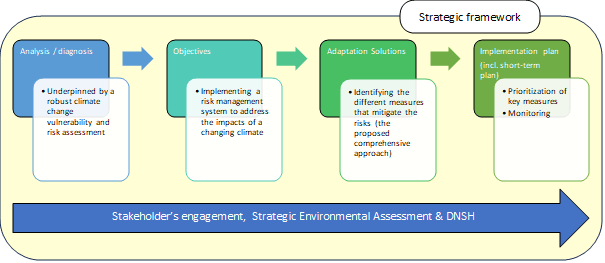
Our advisory services span the entire planning process: from initial analysis and diagnosis to the prioritisation of investments. These plans are underpinned by robust climate vulnerability and risk assessments, ideally aligned with the methodology outlined in the EU Technical Guidance on the Climate Proofing of Infrastructure.
The structure of these plans typically follows the framework illustrated in the image below.
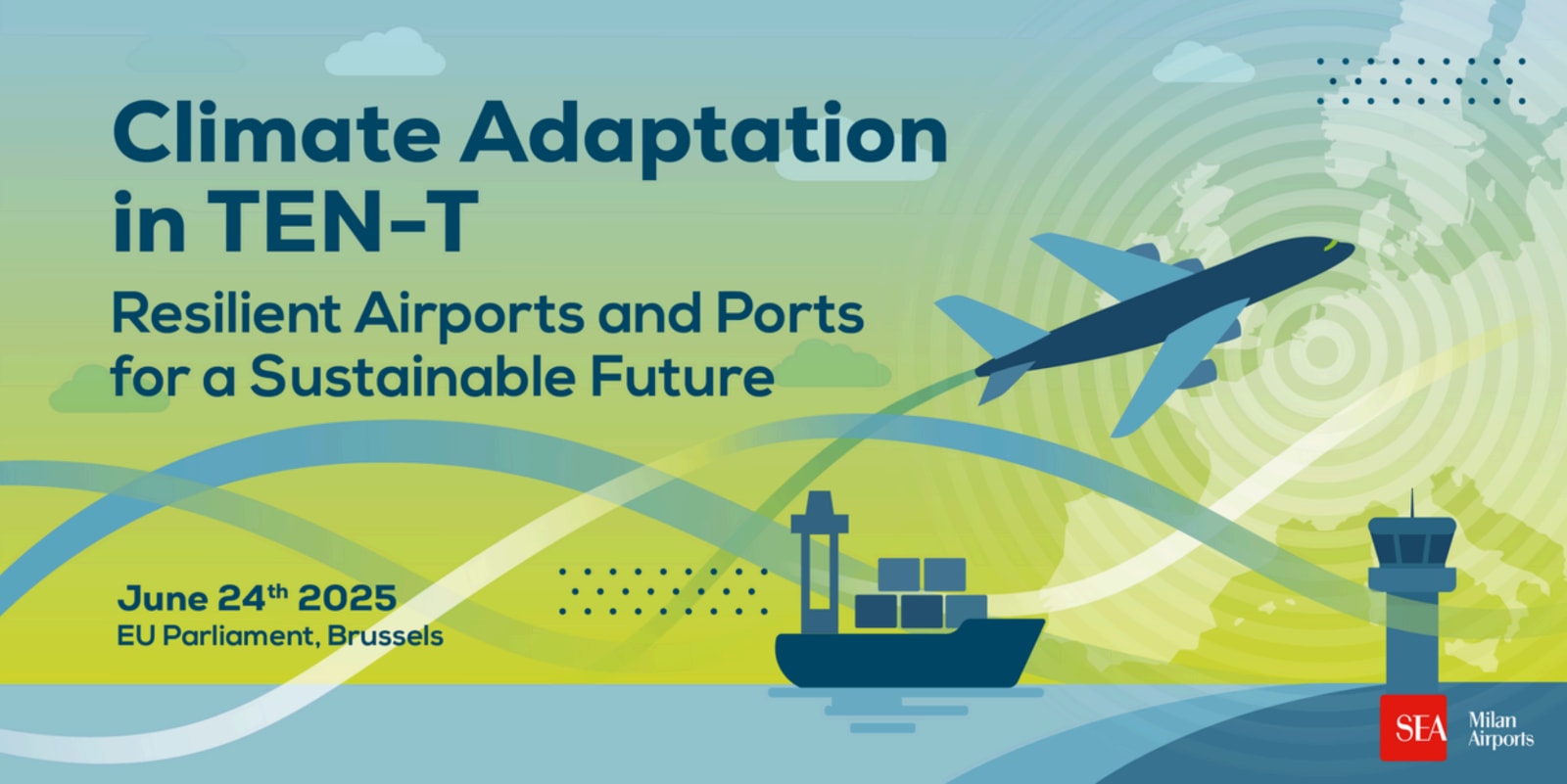
EU Parliament Event: Resilient Airports and Ports for a Sustainable Future
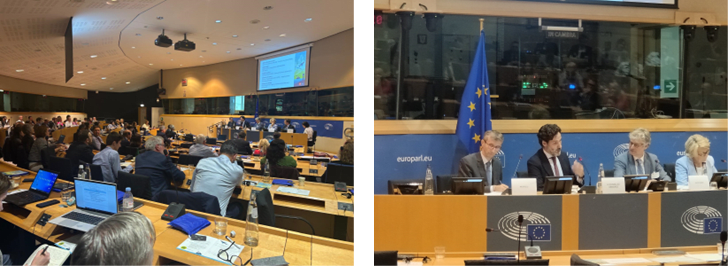
Last week, I had the opportunity to participate in an event organised by SEA Milan Airport, under the auspices of MEP Pierfrancesco Maran.
The event featured the presentation of three key studies, followed by a panel discussion in which I took part:
A study by DG MOVE on the TEN-T network
The Adaptation Plan for Milano Malpensa Airport
Resilience strategies and climate adaptation actions at the Port of Antwerp-Bruges
Mainstreaming climate resilience
The event was a powerful reminder of how critical it is to embed climate resilience into every aspect of infrastructure planning and delivery — not just in flagship projects, but across the board.
Mainstreaming climate resilience is key.
For those who, like me, sometimes mix up mainstreaming and streamlining — here I really do mean mainstreaming: integrating climate resilience into everything we do. From maintenance to traffic management, from strategic planning to project implementation, resilience must be a core consideration.
To do this effectively, we need to recognise the full range of adaptation measures that contribute to climate resilience.
We’re currently finalising a practical guidance note based on the knowledge and experience gained through our lending and advisory work. This guidance consolidates the various adaptation solutions identified by asset managers into a structured approach — illustrated in the image below.
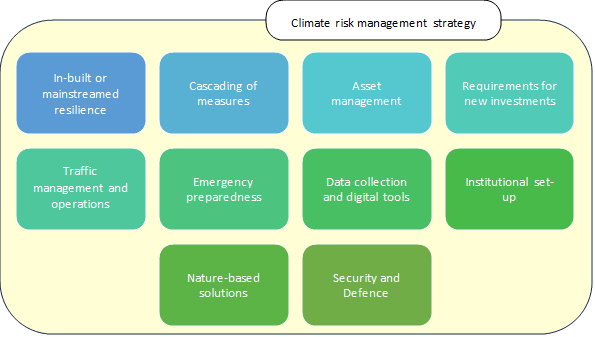
That’s why I was particularly pleased to see that both the Port of Antwerp-Bruges and Milano Malpensa Airport included a wide range of adaptation solutions in their plans, such as:
Institutional set-up: The merger of the Ports of Antwerp and Bruges (Zeebrugge), maximising synergies between the two
Asset management: Upgrades to existing infrastructure, such as the drainage system improvements at Malpensa Airport
Standards and procedures: Updates to pavement resurfacing standards for flight infrastructure
Emergency preparedness: Implementation of strict protocols for managing weather-related emergencies at Malpensa
Data and digital tools: Installation of new sensors in the airport’s Maintenance Control Room
It was also fascinating to hear about the dual water challenge faced by the Port of Antwerp-Bruges — managing both excess and scarcity — a reminder of the complex realities of climate adaptation.
Resilience & Security and Defence
This wide range of adaptation solutions should also include investments related to military mobility, under the broader policy priority of Security and Defence. Our greatest concern is not just the infrastructure itself, but the protection of human lives and their safety. And the need for resilient infrastructure is never more critical than when, unfortunately, it must serve military mobility purposes.
And what about you?
Are you working on a climate resilience and adaptation plan?
Or conducting a climate vulnerability and risk assessment?
Or maybe you've just identified some key measures to address climate risks?
I’d love to hear about it — feel free to share!
Further reading
General on the EIB Activity
EIB operations mentioned
ADIF RAIL RENEWAL & RESILIENCE
POLISH NATIONAL ROADS RESILIENCE PROGRAMME
Guidance on Climate Resilience
JASPERS practical sectoral guidance on climate resilience proofing
DG MOVE’s resilience study on the TEN-T Network
A sustainable and resilient transport network bringing Europe closer together - European Commission