Ports electrification and the quest for European energy autonomy
April 08, 2026 · Originally published on The mobility climate
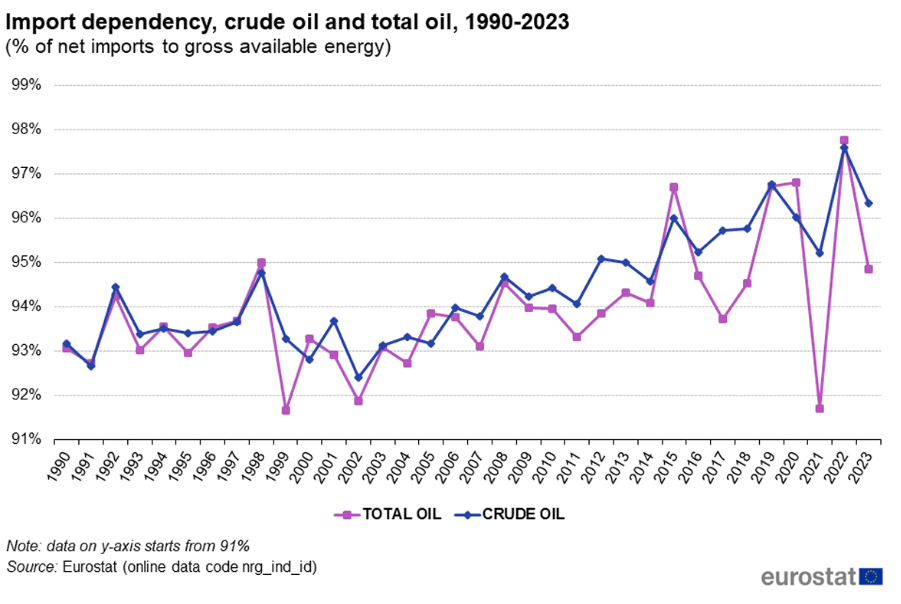
Breaking away from fossil fuels was never about decarbonisation only. Strategic and economic security considerations are at least as important. The European Union’s dependency on oil imports is roughly 95% with an overall upward trend. While sustainable fuels can play a role in reducing this dependency, the EU is also a net importer of them. That is why financing onshore power supply in European ports, as the EIB is doing in ports like Rotterdam and Málaga, is not only about decarbonisation or air quality, but also about the European energy autonomy.
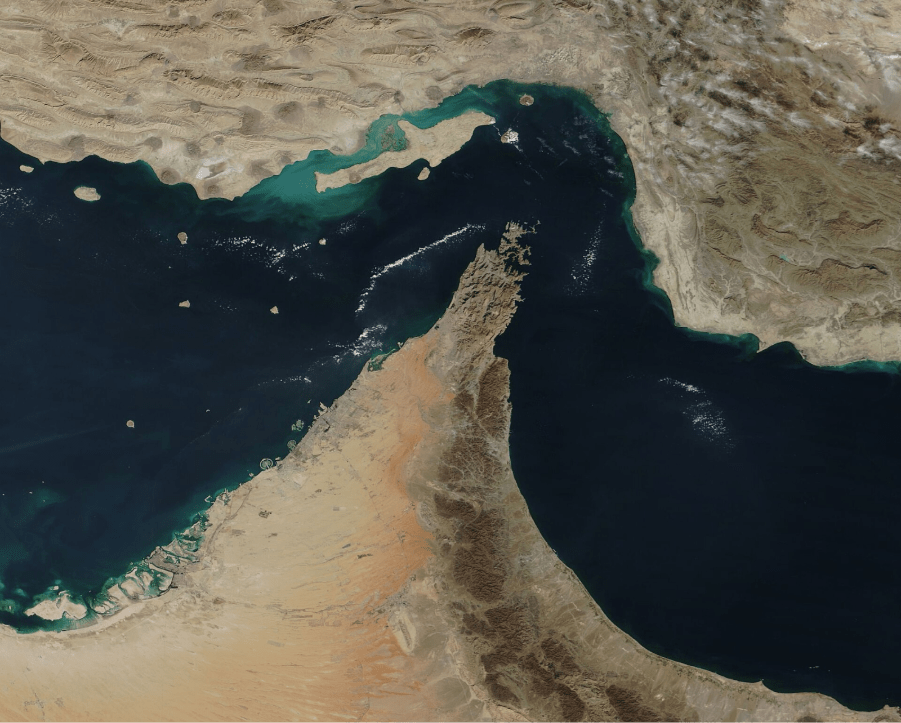
The Iran War, the closure of the Strait of Hormuz, and the subsequent energy disruption make the strategic and economic security considerations even more pressing, with the EU’s Energy Commissioner asking to prepare for a long-lasting energy shock and to implement fuel-saving measures.
Transport is the main consumer of oil. In 2023, the transport sector accounted for 65% of the final energy consumption of oil, road transport (47.5%), air transport (8.8%), and water transport (8.4%). Inevitably, the transport sector is the largest single sector in terms of CO2 emissions. And, while the importance of water transport seems small (8.4% - equivalent to 27.4 Mtoe), it is just a little bit below the consumption of Poland (29.9 Mtoe), EU’s fourth country in terms of final oil consumption.
Road transport has a clear path for decarbonisation (batteries) but this is not the case for maritime transport (nor aviation). By and large, batteries are not a suitable solution for maritime transport, due to the long distances and heavy cargo with the current technologies. Underlining the current battery technological development is important. Just a few years ago, that was the prevailing view regarding electric trucks, which are increasingly becoming a reality.
While batteries cannot decarbonise ships at sea, electrification can decarbonise ships at ports. Electrification has a key role to play.
When docked at ports, large vessels still burn fossil fuels to run generators for their onboard electrical systems. As reported by Transport & Environment, these generators do not only generate carbon emissions, but also substantial noise and air pollution. “Over 6% of the EU maritime CO2 emissions come from ships running on fossil fuels at ports. Alongside CO2, ships also emit high amounts of sulphur oxides (SOx), nitrogen oxides (NOx) and particulate matter (PM), which have significant effects on human health”.
Therefore, investing in onshore power supply to electrify the energy demand of vessels at ports addresses many different objectives: from economic security, to decarbonisation, to improved quality of life in port cities. That is why the roll-out of onshore power supply has a prominent role in the EU Ports Strategy.
And that is also why the Rotterdam Shore Power (a joint venture between the Port of Rotterdam Authority and Eneco) and the EIB just signed a EUR 90 million loan for the deployment of onshore power facilities at three deep-sea container terminals in the port of Rotterdam, with 35 connection points. Last year, the Port of Málaga Authority and the EIB signed a EUR 50 million loan for the construction of a new terminal and the electrification of all port terminals to support electricity to docked ships.
The EIB role goes beyond financing. EIB Advisory aims at supporting project promoters and public authorities in designing the bankable investments that can make a difference.
Specifically, EIB Advisory is there to support the rollout of onshore power supply in European ports. A new assignment on capacity building for small and medium ports is starting, including a module on port decarbonisation and onshore power supply. This assignment was announced together with the new EU Ports Strategy. Another example, at national level, EIB Advisory supported the Spanish Authorities in channelling EU Funds from the European Regional Development Fund to finance investments in onshore power supply across the Spanish ports.
The rationale for investing in onshore power supply is clear. The main challenge looking forward is reaching the scale and speed needed to match the European ambition, and the EIB is ready to play its key role.