Tying together climate adaptation, transport poverty and the new requirements to the TEN-T urban nodes
September 23, 2025 · Originally published on The mobility climate
One of the wonderful things about the EIB is working together with a great team of experts, from whom I learn every day.
Equally wonderful is working on themes that, together with military mobility and sustainable alternative fuels, are shaping the urban mobility landscape in Europe:
Climate adaptation and resilience of the transport sector
Transport poverty
The requirements of the new TEN-T regulation on the urban nodes
Last week, I travelled on a mission to Rome for meetings with the Ministry of Transport on the TEN-T urban nodes and the climate adaptation of the road and rail networks. I also took part remotely in an event on sustainable mobility during the European Mobility Week.
The discussions in Rome, together with the preparation for the event, helped me realise how interconnected these three topics are; yet how often they are treated as separate challenges.
For example, most vulnerable people are more dependent on public transport and walking, being therefore more vulnerable to the impacts of climate change. In my opinion, the best way to address these challenges effectively is through the sustainable urban mobility plans (SUMP) that are mandated by the new TEN-T regulation.
Let's delve into it!
CLIMATE ADAPTATION AND RESILIENCE
Climate change is already a reality today. It will mean more heat and extreme events as we continue adding more and more energy to our planet.
Climate change can jeopardize decades of work promoting sustainable mobility. Just to provide an indicator, let’s consider walking, which plays a key role in the mobility of cities across Europe, and especially in Mediterranean countries such as Spain and Italy. Sometimes, walking is the preferred mode of transport.
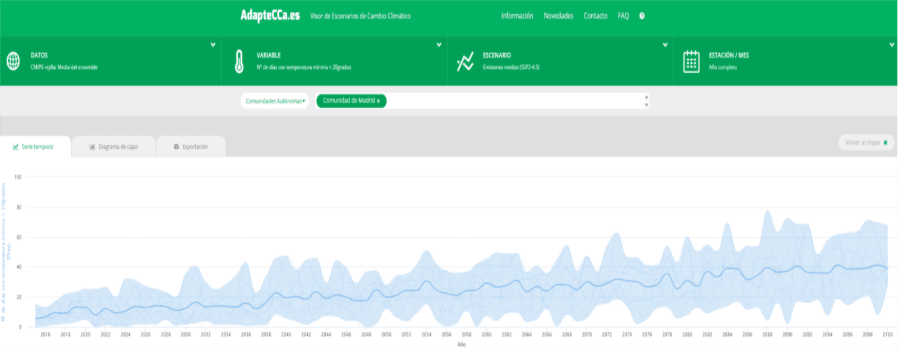
Climate change will add days, weeks and months to Spain’s already hot summers. Climate change will increase the maximum temperatures, the number of tropical nights, as well as the frequency and duration of heatwaves. For example, according with AdapteCCa AdapteCCa (the Spanish platform on climate adaptation), the number of tropical nights will grow in Madrid Region from 5.5 days (2015) to 14 (2035) and 20 (2050); considering a scenario based on moderated emissions (SSP2-4.5).
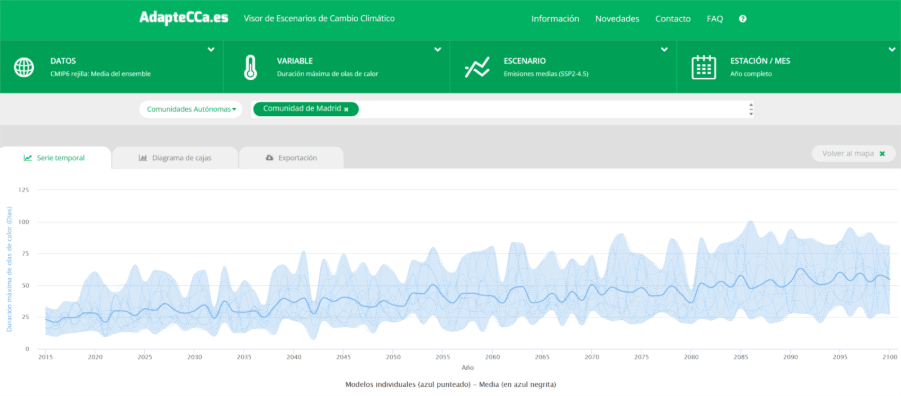
The same trend is followed by the maximum length of heatwaves, which is expected to grow from 23 days in 2015, to 29 days in 2035, and to 35 in 2050. Again, using data from AdapteCCa for Madrid Region under the scenario SSP2-4.5.
Unless we act by cooling and greening our cities, climate change will impact our willingness to walk, bike or use public transport, undermining the sustainable mobility policies that cities and regions have been implementing for the last two decades.
But it is not only our modal share. Extreme events, as we unfortunately witnessed last year in Valencia, can damage the infrastructures we use every day: commuter rail, roads, and public transport, disrupting for days, weeks and month our mobility systems.
We need to adapt our mobility systems and infrastructures
to resist...
to react to...
and to recover quickly from...
...climate change
That’s why EIB Advisory is working with asset managers across Europe to adapt transport infrastructure to climate risks, including Italy’s Ministero delle Infrastrutture e dei Trasporti, and Spain's ADIF, Metro de Madrid or the DG on Roads in Spain.
TRANSPORT POVERTY
Transport poverty is an emerging priority at EU level. Through the financing to be provided under the Social Climate Fund, it is due to play a key role driving urban mobility investments.
The European Emission Trading System (ETS) is a key EU policy for reducing greenhouse gas emissions. The ETS sets a cap on total emissions and allows companies to buy or sell emission allowances. It operates on a "cap-and-trade" principle, incentivising industries to cut emissions cost-effectively. This system has been extended to cover transport and household emissions (ETS II).
The Social Climate Fund has been developed alongside with the extension of the ETS to transport and household energy. Its objective is to mitigate potential effects on vulnerable citizens, communities and companies; by funding measures addressing transport and energy poverty.
And the scale of the Social Climate Fund is huge. Between 2026 and 2032, it expects to mobilise at least EUR 86.7 billion addressing transport and energy poverty, of which roughly EUR 65 billion would be provided by the ETS mechanisms and EUR 21.7 billion would come from the national contributions.
With such figures, the Social Climate Fund will become one of the biggest funding sources of the EU. For context, the Connecting Europe Facility, a flagship programme financing transport, energy and digital interconnections, has a budget of EUR 33 billion for the period 2021-2027.

As you can see from the methodology proposed by the European Commission or the work done by the Spanish Ministry of Transport, transport poverty relates mainly (although not exclusively) to local, day-to-day mobility, and to access to employment, education and services.
Therefore, cities, metropolitan areas, and rural communities need to play a key role in identifying the specific challenges and solutions to transport poverty.
TEN-T URBAN NODES
The Trans-European Transport Network (TEN-T) regulation guides the development of a coherent, efficient, multimodal, and high-quality transport infrastructure across the EU.
For most people, it is best known for its network of European Transport Corridors. For example, the Atlantic and Mediterranean Corridors cross Spain, while the Mediterranean, Scandinavian-Mediterranean, Baltic Sea-Adriatic Sea, and North Sea-Rhine-Mediterranean Corridors, connect Italy to the rest of Europe.
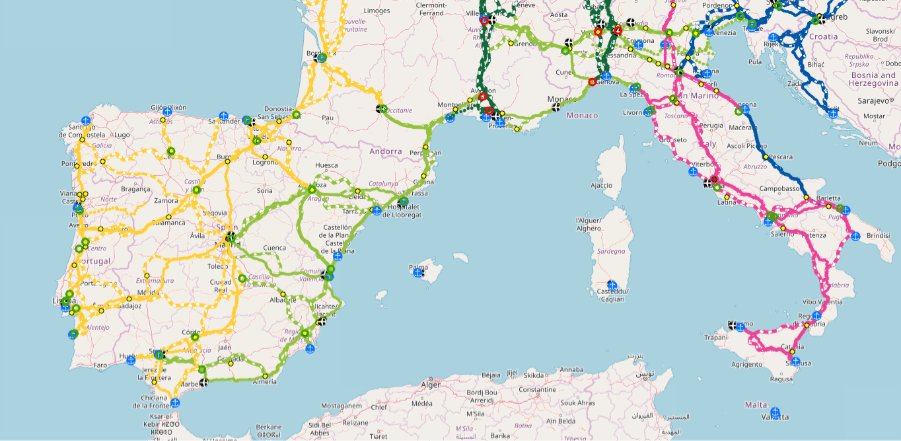
Last year, the regulation was revised. One of the key changes is the increased importance given to urban mobility and the TEN-T urban nodes.
This increased importance is reflected in an expansion of the urban nodes, jumping from 88 to 431, now including cities above 100,000 inhabitants as well as the biggest city of each NUTS2 region.
It also introduces new requirements for the TEN-T urban nodes, notably:
Reporting on urban mobility indicators
Sustainable Urban Mobility Plans (SUMP)
Multimodal passenger hubs
Freight terminals
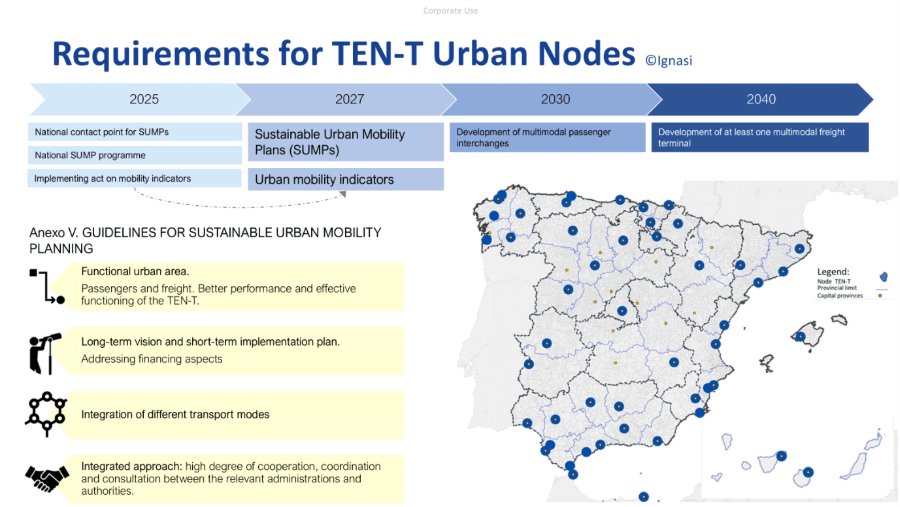
For the Sustainable Urban Mobility Plans (SUMP), the TEN-T regulation sets out the guidelines for their development, which notably include:
Consideration of the functional area both for passengers and freight, supporting an efficient functioning of the TEN-T network.
Long-term vision and short-term implementation plan, linked to financing resources
Integration of the different modes of transport
Cooperation and collaboration across levels of government
This is all summarized in the slide below; developed by a colleague from the Spanish Ministry of Sustainable Infrastructure, that I have “stolen” and translated for you.
However, implementing Annex V's guidelines is not straightforward. Mainly, but not only, due to governance issues. That is why EIB Advisory is supporting the Spanish and the Italian Ministries of Transport in implementing the new TEN-T policy when it comes to the urban nodes.
TO WRAP UP
As I mentioned at the beginning, while the three items are normally addressed separately, they are clearly interconnected.
To ensure the success of the Social Climate Fund, the European Commission and the Member States need to identify the right investments, which need to be impactful and cost-effective. How can the right investments be identified to address transport poverty, if transport poverty is not addressed in the sustainable urban mobility plan?
When Spanish and Italian cities are becoming even warmer, how can cycling and walking be further promoted? Which measures need to be included in the SUMP, not to increase their modal share, but actually to prevent that walking and cycling from losing ground.
Finally, who has the most to lose? Who would be more affected by climate change?
SUNDAY – CAR-FREE DAY
As every year, the European Mobility Week ended with the car-free day. It is always:
a day for optimism and hope
a day to continue working to transform our cities and how they move
a day to fear not.
Thanks a lot for being there: subscribing, commenting and sharing.