Where the new EIB Advisory assignment in Spain supporting Campo de Gibraltar’s BRT - is discussed
October 07, 2025 · Originally published on The mobility climate
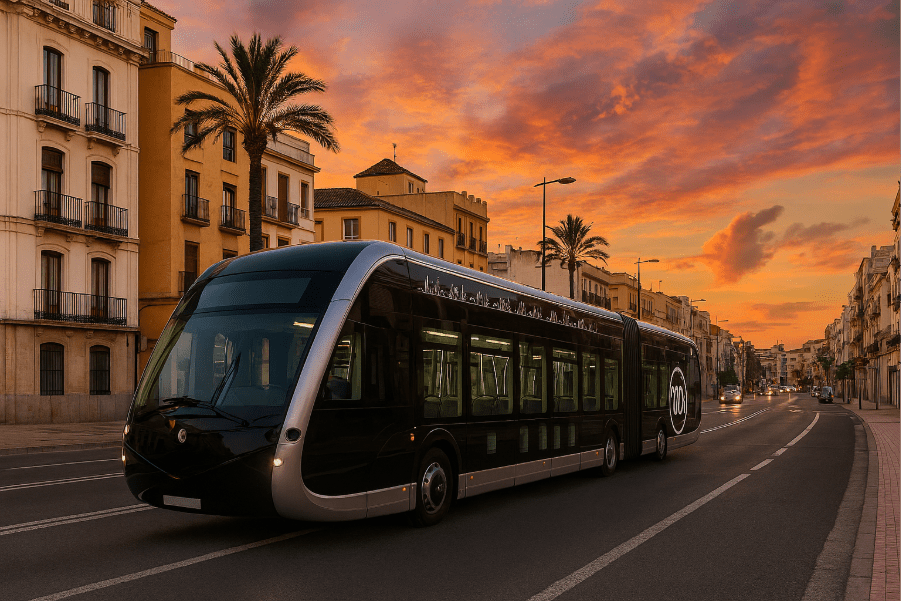
The Bus Rapid Transit (BRT) system of Campo de Gibraltar is one of the most exciting public transport projects under development in Spain. This project is more than transport—it is about connecting communities, reducing emissions, and shaping the future of a strategic region.
For those less familiar with the acronyms in the mobility arena, BRTs aim at getting the best out buses and tramways. They have the flexibility and low cost provided by buses, which combined with exclusive lanes, distancing of stops, and high frequency can provide even better service than traditional tram/light metro projects in terms of their commercial speed, capacity, and reliability.
To understand why this project matters, let’s look at the region it is due to serve.
CAMPO DE GIBRALTAR: A JUST TRANSITION REGION AT THE CROSSROADS OF EUROPE AND AFRICA
Campo de Gibraltar has a distinct geography, characterized by its frontier nature. Located in the Spanish side, Campo de Gibraltar borders with Gibraltar itself and with the African continent, less than 8 nautical miles away. Moreover, Campo de Gibraltar is in the border between the Mediterranean and the Atlantic seas.
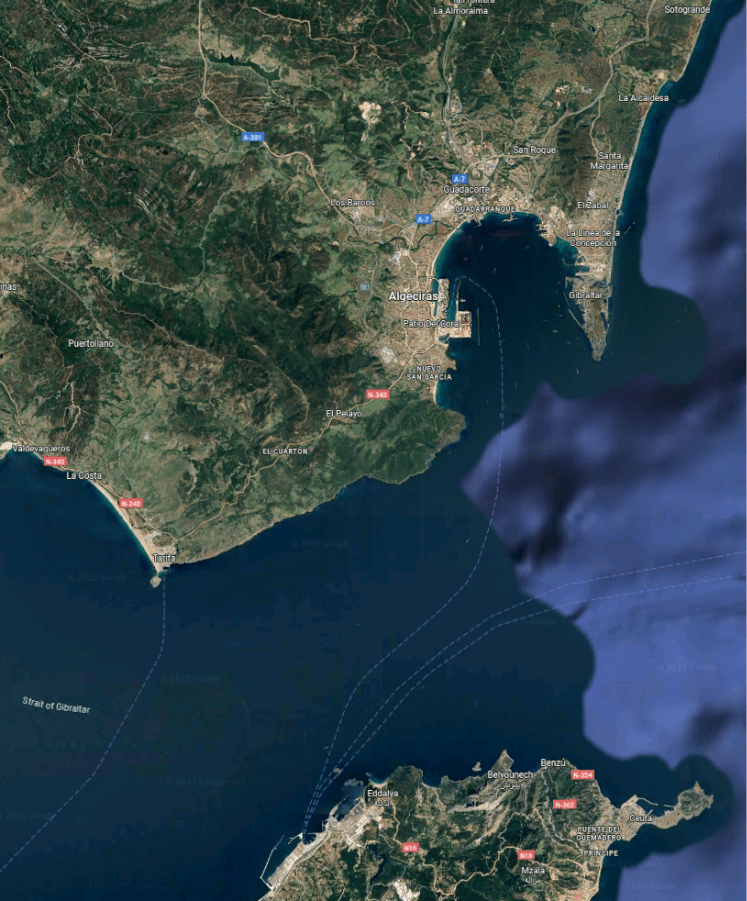
Campo de Gibraltar comprises eight municipalities with 270,000 inhabitants. The largest are Algeciras (120,000) and La Línea de la Concepción (60,000). The economy of Campo de Gibraltar is heavily influenced by the Port of Algeciras, one of the busiest in Europe, and by cross-border employment linked to Gibraltar. While Gibraltar has a population of roughly 40,000 inhabitants, according with the UK Foreign Office, “approximately 15,000 people – over half of Gibraltar’s workforce – cross the land border between Spain and Gibraltar every day”.
Despite this, the area faces structural challenges: per capita income is below the Andalusian average and significantly lower than Spain and the EU, reflecting persistent socio-economic disparities. Unemployment remains high, often exceeding 20%, with youth unemployment particularly acute.
The area is also one of the EU territories under the Just Transition Mechanism, which aims at supporting affected regions in Europe affected by the decarbonization of the economy. In the case of Campo de Gibraltar, the closure planned of EDP’s Los Barrios coal-fired power plant is expected to impact more than 150 jobs directly.
With this context in mind, here’s how the region is planning its mobility future.
A SMART CONCEPT FOR CAMPO DE GIBRALTAR
The Junta de Andalucía is taking the right steps.
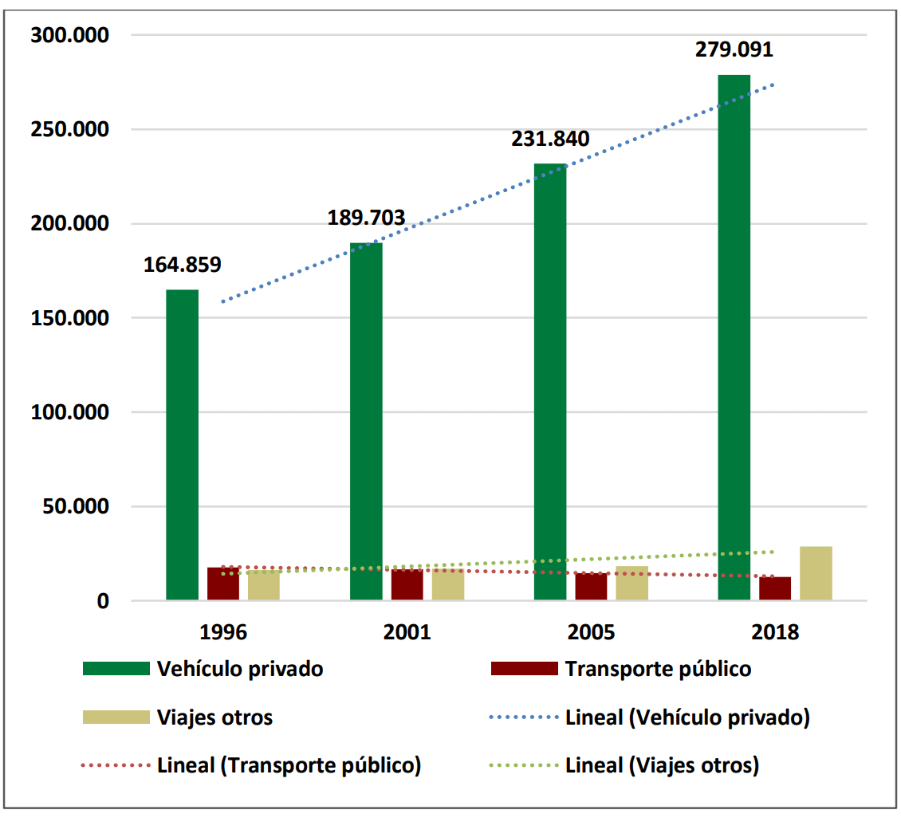
In 2023, the regional government approved the Sustainable Urban Mobility Plan (SUMP) of Campo de Gibraltar. Its main objective is to foster public transport, which currently accounts for less than 10% of the trips in the area. This SUMP provides the strategic framework for the project, ensuring its integration in the broader mobility system of the area.
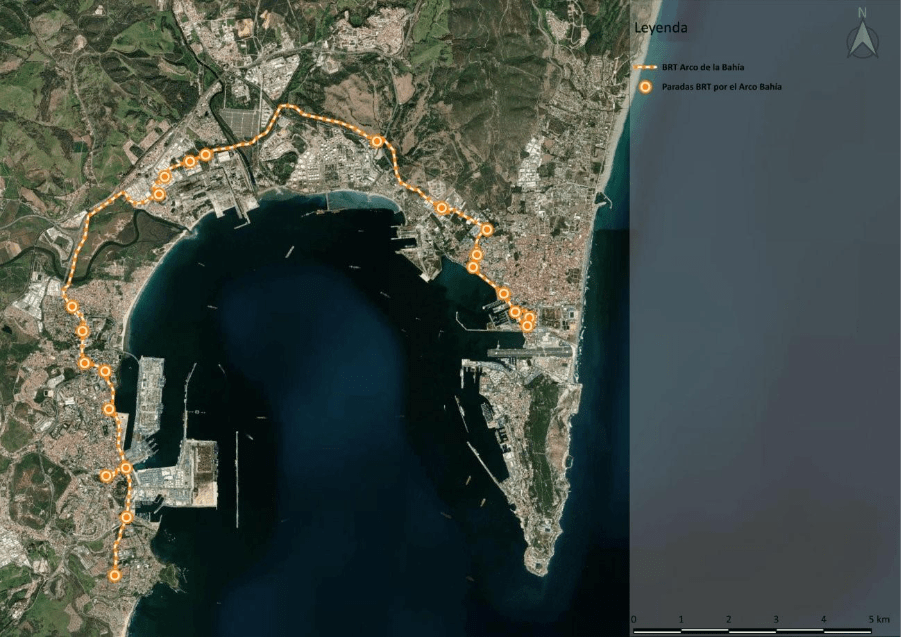
The Bus Rapid Transit (BRT) system of Campo de Gibraltar is the right project for the expected demand (roughly 10,000 passengers per day at the beginning of the operations). Compared with other options, such a light metro, it offers the right balance between capacity and demand, while making the most from the flexibility provided by bus services.
As a benchmark, Zaragoza’s Tram moved more than 80,000 passengers per day, peaking at almost 150,000 passengers in a single day. With these numbers, a BRT is the right decision.
The BRT will make travel faster, more reliable and frequent. Moreover, due to the flexibility of the bus service, it will allow extending the service to areas not directly affected by the project, such as Tarifa or Jimena de la Frontera.
Pending the feasibility study, the project looks really promising. It is already attracting a lot of attention. Eight companies have submitted their offers for the development of the feasibility study for the BRT of Campo de Gibraltar.
This is where EIB Advisory steps in—not just to support, but to elevate the project.
EIB ADVISORY: ADDING VALUE BEYOND THE BASICS
The EIB has gathered a multidisciplinary team to advice the Junta de Andalucía in this challenging project, bringing together experts on transport, urban, social, energy and PPP. EIB Advisory will accompany the Junta de Andalucía during the development of the feasibility study and provide as well specific studies as inputs for the feasibility study.
This advisory support is linked with the EIB Strategic Priorities (climate action, technological innovation, cohesion, and social infrastructure) and other EU priorities including Just Transition and the Clean Industrial Deal.
ADVICE DURING THE FEASIBILITY STUDY
The feasibility study of the BRT is one of the most important administrative steps. It is the basis to achieve the environmental permits, and it aims at defining the most important elements of the future project, including among other:
The exact corridor of the BRT (alignment)
The location of the stops
The expected demand (patronage)
The cost-benefit analysis
The inclusion of climate aspects, both mitigation and adaptation
Etc.
EIB Advisory support during the feasibility study complements the team in charge of the project at the Junta de Andalucía, bringing complementary views.
SPECIFIC INPUTS FOR THE FEASIBILITY STUDY
The objective of these studies is to bring to the front some specific elements, which traditionally play a secondary role in the feasibility study, but which can make a good project great.
These specific studies cover:
Energy supply options for the BRT, such as electric, hydrogen and biofuels. In doing so, we aim at finding synergies with clean technologies in the EU. The latest two (hydrogen and biofuels) aiming at finding potential synergies with some planned investments in the region of Andalucía, such as EDP’s Green H2 Los Barrios, which will replace the coal-fired power plant, and MOEVE’s biofuels plant in Huelva, financed by the EIB with a loan of EUR 415 million.
Urban integration of the BRT, ensuring accessibility to jobs and services (health, education, etc.) and maximizing the positive impacts of the project. Focusing of the urban integration aims at bringing a transformative project, not limited to the transport investment, but exploiting potential synergies for urban development.
Options for public-private partnerships (PPP) aiming at promoting the private sector financing and reducing the budgetary constraints on the public sector.
Social considerations, including gender, with a focus on the potential impacts of the project, both negative (to mitigate them) and positive (to maximize them). These social considerations are key in connecting the project with transport poverty, a topic I explored here, and the potential EU funding through the Social Climate Fund.
Two weeks ago, we had the kick-off meeting for the development of these specific studies. I can only be grateful for all the energy and excitement of everybody around the table.
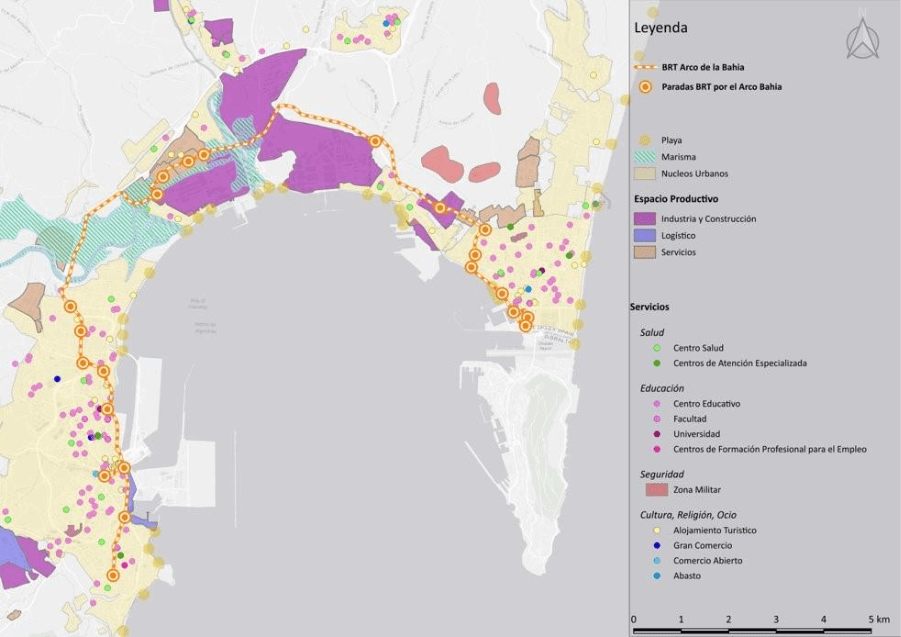
Today’s plans are the seeds which could blossom into a landmark and historic project. Stay tuned for Part II.
THANKS FOR READING
Thanks a lot for reading, sharing and commenting.
On the commenting side, I’m looking forward to learning more about experiences designing, operating and implementing BRT systems – especially for medium size cities (200-500k inhabitants).
As always, the views presented here are entirely my own. They do not represent the positions of my employer, nor those of the stakeholders and clients in work with. For more info: A (not-to-long) disclaimer