Where the new EIB Advisory assignment in Spain—supporting Metro de Madrid in the preparation of its Climate Resilience and Adaptation Plan—is discussed
July 08, 2025 · Originally published on The mobility climate
Extra! Extra! Read all about it!
The European Commission has greenlit a new EIB Advisory assignment in Spain!
Just last week, approval was granted for EIB Advisory to support Metro de Madrid in preparing its Climate Resilience and Adaptation Plan.
A great team is in place and ready to start working after the summer break!
In Brief: The European Commission has approved a new EIB Advisory assignment to support Metro de Madrid in preparing its Climate Resilience and Adaptation Plan. This post explores the metro’s history and its key figures, the role of EIB financing, as well as the objectives and scope of the new assignment – plus a personal reflection from someone who grew up riding it.
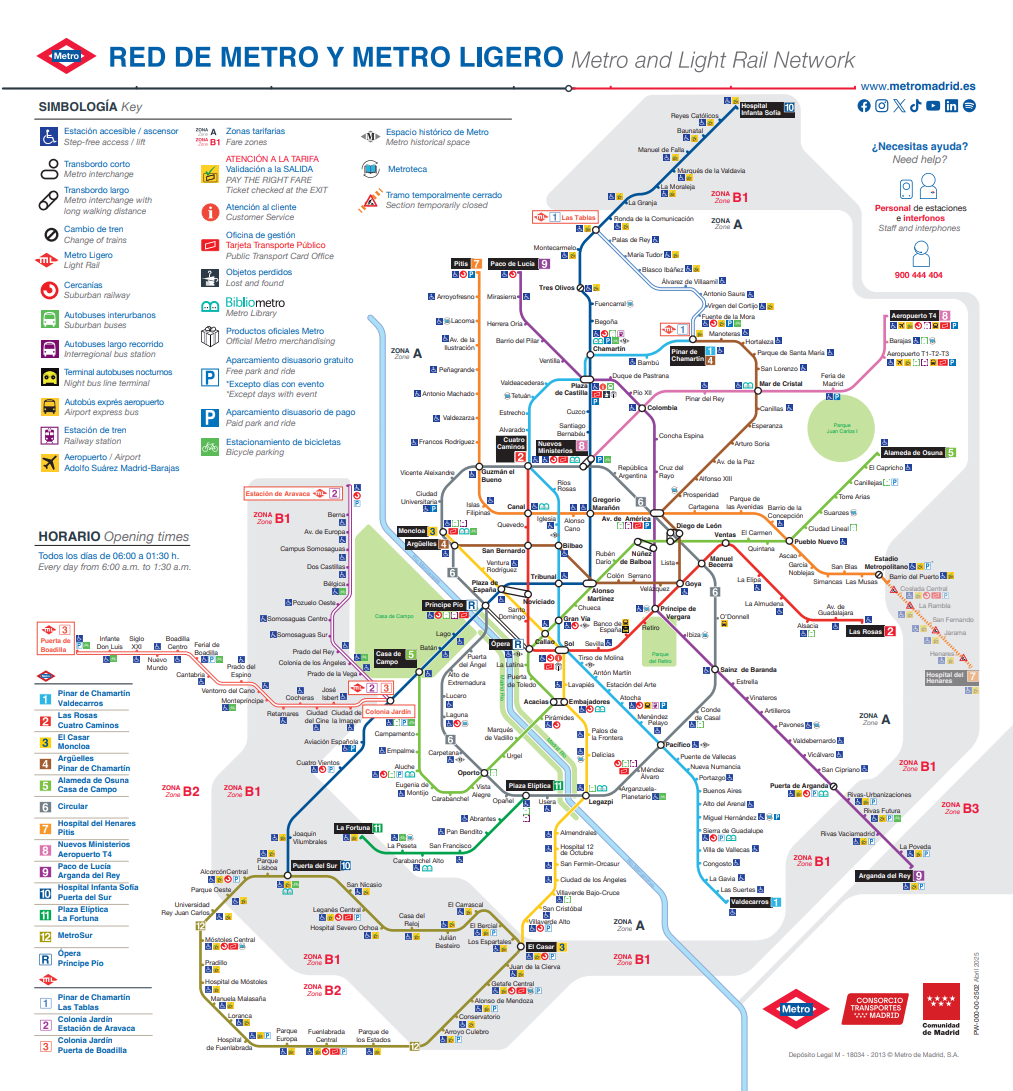
Image No 1: Madrid’s Metro Network. Source: Metro de Madrid
METRO DE MADRID
Metro de Madrid started operations in 1919 – more than a hundred years ago, with the inauguration of metro line 1 between Cuatro Caminos and Sol. Since then, it has grown impressively. It currently has over 300 metro stations, distributed along a network of almost 300 km structured in 12 metro lines (plus the small connection – ramal – between Opera and Principe Pío).
Even more impressive: last year (2024), Metro de Madrid transported more than 715 million passengers.
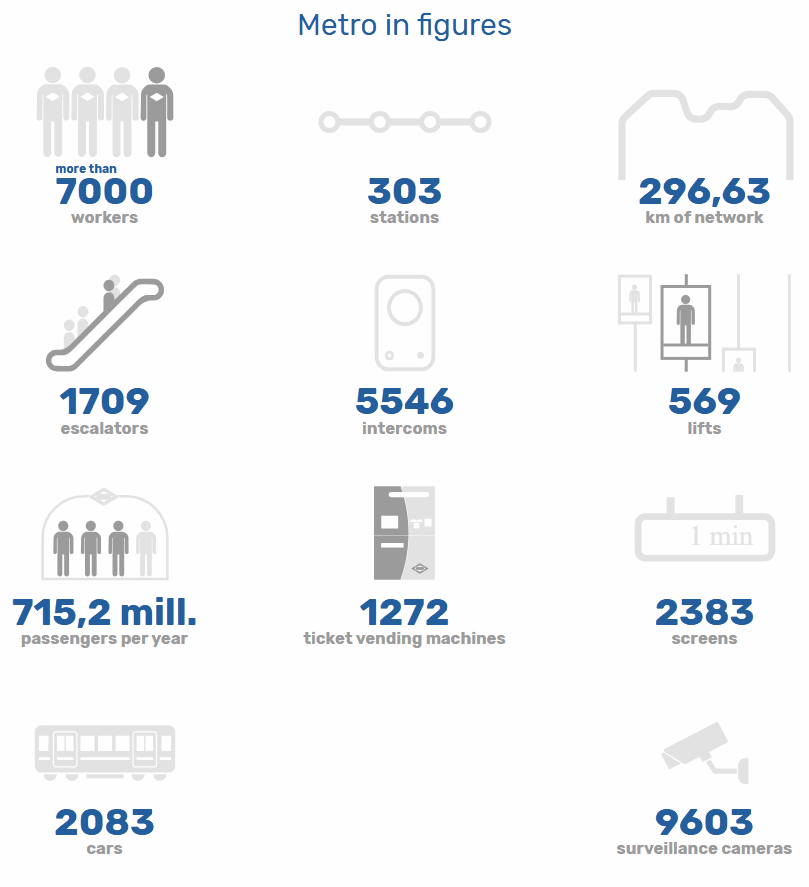
Image No 2: Metro de Madrid’s key figures. Source: Metro de Madrid
Metro de Madrid also has a ghost station: Chamberí – located in one of the coolest areas of the city. It was one of the original eight stations linking Cuatro Caminos and Sol when the metro first began operations. But in 1966, it was closed – as it was not possible to extend its platform to accommodate the longer trains introduced on the rest of the line. In 2008, it was brought back to life as a museum. Before that, passing through it on Line 1 – dimly lit, abandoned, and vandalized – could feel genuinely eerie. More info: here.

Image No 3: Chamberí (ghost) station – now a museum. Source: Metro de Madrid
EIB FINANCING TO METRO DE MADRID
The European Investment Bank has played a key role in financing the upgrade of its infrastructure and rolling stock. The first operation with Metro de Madrid was in 1989 for an EIB loan of 9.5 billion... of pesetas – the Spanish currency from the XIX century until the introduction of the Euro in 2002 (with a conversion rate of 1 euro equalling 166 pesetas). But still a significant EIB loan – above € 55 million.
Since 2017, the EIB has signed three operations with Metro de Madrid, totalling € 870 million on infrastructure upgrades and rolling stock. You can consult the projects here, here, and here.
EIB FINANCING TO METRO DE MADRID’S EXPANSION
Already since 1955, the expansion of Madrid's metro network was to be promoted (and financed) by national government; and since 1986 by the regional government of Madrid, resulting from the institutional de-centralization following Spain's 1978 Constitution.
The EIB has also been a key financier of the metro extensions, notably in the first decade of the 21st century.
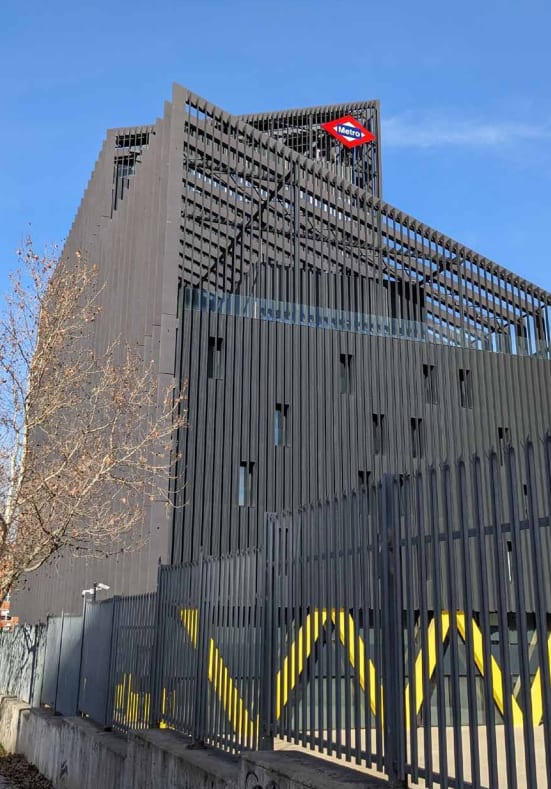
Image No 4: Metro de Madrid headquarters - featuring the original black and yellow colors . Source: Metro de Madrid
METRO DE MADRID CLIMATE RESILIENCE AND ADAPTATION PLAN (EIB ADVISORY ASSIGNMENT)
The objective of the assignment is for EIB Advisory to support Metro de Madrid when developing its Climate Resilience and Adaptation Plan of Madrid’s Metro Network.
Image No 5: Metro de Madrid logo. Source: Metro de Madrid
EIB Advisory proposes a practical approach for the development of Metro de Madrid’s Climate Resilience and Adaptation Plan:
Based, to the extent possible, on existing information, assessments and datasets
Identifying in-built resilience (existing elements already addressing current and future climate risks) and further mainstreaming climate resilience in existing practices
Defining cost-effective adaptation solutions
The following specific elements are foreseen:
Provision of a general methodology and framework for the climate vulnerabilities and risks assessment and resilience plan for transport networks
Support in adjusting the general methodology and framework to the specificities of Metro de Madrid
Support in reviewing the main deliverables and milestones and overall implementation of the work
Provision of a general framework to identify adaptation solutions
Support in the identification of a short-term investment plan
Support in the identification of potential sources of funding, notably EU Funds and EIB financing.
Support in the identification of synergies with other EU priorities, notably security and defence
The assignment is aligned with the EIB Strategic Roadmap, and notably with the Core Strategic Priorities of:
Climate change and environmental sustainability, and
Social infrastructure
This EIB Advisory assignment is provided through the JASPERS, a partnership between the European Commission (DG MOVE, DG REGIO, DG NEAR) and the European Investment Bank to support the preparation of investments. More info can be found at: JASPERS — Joint Assistance to Support Projects in European Regions
IT'S PERSONAL
Being from Madrid, Metro de Madrid played a daily role in my life for more than a decade – from the start of my university studies until I left Spain in 2012 to live in Perú:
First day at university – Escuela Superior de Ingenieros de Caminos, Canales y Puertos (Universidad Politécnica de Madrid) – Line 6 / Ciudad Universitaria
First day in my first job – Line 2 / Canal
First date with my wife – won’t tell you where; too special :)
And then, of course, the nights out – and the rides back home, sometimes catching one of the early morning services. And the songs, like Joaquín Sabina's:
En el Cuaderno de Bitácora de Tirso de Molina
Sol, Gran Vía, Tribunal...
Still, whenever I go back to Madrid, I take the metro.
WHAT ABOUT YOU?
What are the main climate hazards in your mobility system?
Are you developing a climate resilience and adaptation plan?
Or maybe just the first risk and vulnerability assessment?
Please subscribe, comment on this post, and share your thoughts and examples from your city.
TO BE CONTINUED…
Next week in Part II: What climate hazards threaten Madrid’s metro—and how can they be addressed?
AND PLEASE REMEMBER:
*** The views presented here are entirely my own. They do not represent the positions of my employer, nor those of the stakeholders and clients in work with. For more info: A (not-to-long) disclaimer ***